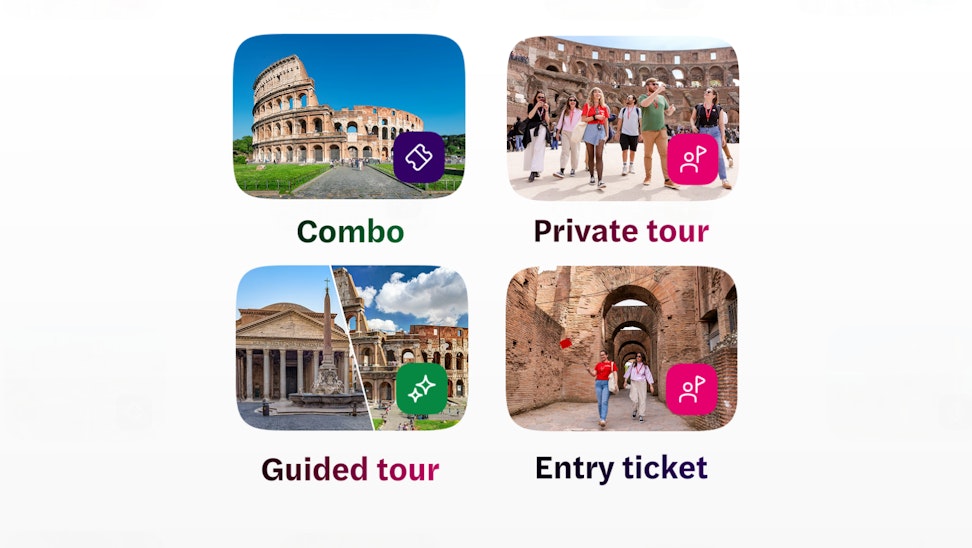
We research and organise all unique experiences - from tickets to tours to special combos - so you get all the choices without the clutter.
We partner with the best
Every supplier is vetted for quality, reliability, and value so you only get top rated experiences. No surprises, no disappointments.
All the best options, in one place
Each experience is thoughtfully organised to give you maximum availability, great value and an easy way to choose.
Book with complete peace of mind
Free cancellations, Flexible payments, and 24/7 support - thoughtfully designed for flexibility, assurance, and total peace of mind.
1/4
Slide 1 of 4
Museum of Illusions Dubai: Quick overview
Ways to explore: Standard entry tickets grant full access to all 60+ visual and educational illusions.
Additional access: Tickets include interactive zones like the Vortex Tunnel, the Infinity Room, and the anti-gravity Ames Room.
Unique experiences: Engage with "Dilemma Games" and wooden puzzles designed to stimulate cognitive skills while having fun.
Queues & access: Located in Al Seef, the museum uses a flow-controlled entry system; pre-booked tickets allow you to bypass the on-site ticket counter.
When to book: Weekend afternoons (Friday–Sunday) are the busiest; book morning slots for a quieter experience and clearer photo opportunities.
Good to know: Most visitors spend about 60–90 minutes exploring. The venue is fully indoor and air-conditioned, making it perfect for summer visits.
Best upgrade: Consider a combo ticket with other Al Seef attractions or a Dubai Creek dhow cruise to round out your day in Old Dubai.
What to expect at Museum of Illusions Dubai
1/6
Step into sensory play
Inside Al Seef’s compact illusion museum, you move through over 60 hands-on exhibits rather than stand before static displays. Most visits take 45 to 90 minutes, and the first impression is playful confusion, where floors tilt, mirrors multiply, and nothing looks quite trustworthy.
Start with the room illusions
Begin with the walk-through rooms while your group is fresh: Reversed Room, Tilted Room, Ames Room, and Anti Gravity Room. Unlike a traditional museum route, this one rewards movement, posing, and a second look from the right angle.
Photo tricks need teamwork
Next come the crowd-pleasing installations, Beuchet Chair, Cloning Table, and Head on a Platter. These stops are quick, usually a few minutes each, but they work best when one person poses and another frames the shot.
The Vortex Tunnel moment
The biggest sensory payoff is the Vortex Tunnel, a stable bridge wrapped by spinning light. Many visitors also pause in the Infinity Room, where full-length mirrors repeat your reflection into seeming endless space, then linger over holograms and optical images.
End with puzzles and context
General admission covers all open exhibits [Included]. Finish in the quieter image and puzzle sections, where short explainer panels connect the tricks to vision and perception. A slower final lap gives you better context and clearer photos, not just a quick walk-through.
Pair it with Old Dubai
Because the museum is compact, many visitors continue into Al Seef after exiting. A Dubai Creek abra ride is a natural follow-on [Separate ticket], and nearby Al Fahidi adds more Old Dubai atmosphere without asking you to commit to another long museum visit.
Things to know before booking your Museum of Illusions Dubai tickets
Pre-book for guaranteed entry: While walk-ins are allowed, the museum has a maximum capacity to ensure everyone can interact with the exhibits. Booking online ensures you don't wait for the next available time slot.
Perfect for photography: This is one of the most "Instagrammable" spots in Dubai. Ensure your phone or camera is fully charged, as every exhibit is designed to look spectacular through a lens.
Staff are there to help: Some illusions only work from a specific angle. Don't hesitate to ask the museum staff for tips on where to stand to get the perfect mind-bending photo.
Combo with Al Seef exploration: The museum is located in the Al Seef heritage district. Plan to spend time before or after your visit walking along the Dubai Creek or dining in the traditional-style souqs nearby.
Accessibility: The venue is located on the ground floor and is generally wheelchair and stroller accessible, though some specific illusions (like the Vortex Tunnel) have bypass paths for those with mobility issues or vertigo.
Zones at Museum of Illusions Dubai
Vortex Tunnel
A narrow walk-through tunnel near the early room sequence uses rotating lights to disturb your sense of balance. Visitors cross a stable bridge one group at a time, then rejoin the main path toward the perspective rooms.
Infinity Room
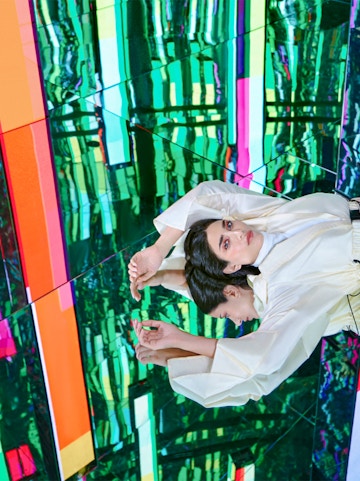
Part of the main room sequence, this mirror-lined space multiplies reflections and works best when you pause briefly for a clear frame. It is a compact stop rather than a walkthrough corridor, so visitors usually move through it quickly.
Reversed Room
This room sits in the main illusion cluster and turns familiar orientation cues on their head. Ceiling-mounted furniture and floor-level posing points create photo setups that usually need a companion or staff help for the intended angle.
Tilted Room
A sloped chamber along the core route makes straight walls and level footing feel unreliable. It is a quick stop for forced-angle photos, but visitors with balance sensitivity often prefer a shorter stay here.
Ames Room
Set within the main room circuit, this distorted chamber makes one person appear larger or smaller than another when viewed from a fixed point. It is one of the three official areas not accessible for wheelchairs or strollers.
Anti Gravity Room
This room follows the perspective-heavy section and plays with your sense of upright and level. The visual trick works best from marked photo positions, and official accessibility guidance lists it among the areas excluded for wheelchairs and strollers.
Installations
Between the larger rooms, installations break the route into quick hands-on stops. Look for Beuchet Chair, Cloning Table, and Head on a Platter, where short queues, staff guidance, and exact camera placement shape the final effect.
Images
Wall-lined displays usually sit between or after the larger rooms, giving you a slower stretch of the visit. Holograms and optical illusions reward close looking, brief reading, and shorter pauses before the final puzzle area or exit.
Plan your visit to Museum of Illusions Dubai
Timings
Opening hours: Mondays to Thursdays, the museum is open from 10am–10pm.
Weekend hours: Fridays, Saturdays, Sundays, and public holidays, it is open from 10am–11pm.
Last entry: The official site does not publish a last-entry cutoff.
Weekly closures: No regular weekly closure is published on the official site.
Visit length: Most visits take around 45–90 minutes.
Best time to visit
Quieter hours: Weekday mornings and early afternoons usually mean fewer waits for photos.
Busier periods: Fridays, Saturdays, Sundays, and public holidays are typically busier.
Seasonality: October to March can feel busier across Dubai’s main sightseeing areas.
Address: Al Seef - Heritage Area, Building P3, Dubai | Find on Maps
Getting there:
By Metro: Take the Red Line to Burjuman Station; it is a 10–15 minute walk or a short taxi ride to Al Seef.By Water Taxi: Take an Abra (traditional boat) across the Creek from Deira to the Al Seef station.Parking: Underground paid parking is available at Al Seef; validate your ticket at the museum for a discount.
Indoor venue: The museum is fully indoors and air-conditioned.
Shop: A museum shop sells puzzles, educational games, and souvenirs.
Photo help: Staff often help visitors understand exhibits and frame photos correctly.
Parking access: Basement parking is available at Al Seef Mall on the Heritage side.
Restrooms: Restroom locations are not published.
Wi-Fi: Public Wi-Fi is not mentioned.
Storage: Lockers or cloakrooms are not mentioned.
Dining: No on-site dining is confirmed.
General access: Wheelchair users and stroller users can access the building, grounds, and parking.
Exhibit limits: Vortex Tunnel, Ames Room, and Anti Gravity Room are not wheelchair or stroller accessible.
Sensory note: The Vortex Tunnel can feel disorienting for motion-sensitive visitors.
Balance note: The Tilted Room is not recommended for people with balance problems or epilepsy.
Planning note: Visitors needing step-free access should expect to skip three signature exhibits.
Support details: Wheelchair loans, lifts, and accessible restroom locations are not published.
Food and drinks: Food and drinks are not allowed inside the museum.
Supervision: Visitors aged 15 and under must enter with an adult.
Photography: Personal photography is common, but flash and tripod rules are not published.
Bag policy: Cloakroom, luggage, and large-bag rules are not published.
Vortex Tunnel: Running, jumping, and climbing the handrail are not allowed.
Behaviour: Please wait your turn at photo exhibits and follow staff safety directions.
Re-entry: Supplier information indicates one same-day re-entry after exit.
Visitor tips & guidelines
Beat photo bottlenecks by starting with the Vortex Tunnel, Reversed Room, and Tilted Room; these setups turn slower per group.
Get the strongest Ames Room size shift by shooting from the doorway center; the long axis drives the perspective trick.
Keep your balance in the Vortex Tunnel by holding the handrail and staring at the doorway; side glances amplify the LEDs.
Make the Infinity Room look deeper by standing near the center line; edge positions break the repeated mirror corridor behind you.
Don’t spend your first minutes in the Holograms and Optical Illusions Gallery; static displays stay easy later, while room-photo queues build earlier.
Save waiting time by moving to Head on a Platter or the Cloning Table when Ames Room crowds thicken; both clear faster.
Reset after the Tilted Room in the Holograms section; fixed panels give your eyes a calmer visual baseline after motion-heavy rooms.
Make the Beuchet Chair illusion read by seating one person and keeping the second farther back; depth separation creates the size switch.
For anyone sensitive to motion, leave the Vortex Tunnel for later and pause in the Holograms Gallery first; static panels feel steadier.
Frequently asked questions about Museum of Illusions Dubai tickets
Yes, advance booking is recommended, especially on weekends and public holidays. Door tickets are sold unless the museum is at capacity, so booking online reduces the risk of arriving when entry is limited.
Usually, standard admission is self-paced rather than a scheduled tour. Official guidance focuses on entry during opening hours, but if your confirmation shows a specific date or slot, follow that because capacity controls can still apply.
No. It mainly avoids the ticket-purchase line. You may still wait for ticket scanning, capacity control, and your turn at popular rooms like the Vortex Tunnel or Infinity Room.
Yes, unless the museum has reached capacity. Online booking gives you the clearest entry guarantee, while door purchase works better if your plans are flexible and you are visiting at a quieter time.
For 2 adults and 2 children, the family ticket is usually the simplest value option. Groups of five should compare the 5-person bundle with separate tickets and only choose it if all five spots will be used.
Standard admission covers the museum’s open exhibits, including major illusion rooms, installations, optical displays, and the Smart Playroom. No separate in-museum upgrade was verified, but accessibility limits apply to three headline rooms.
Yes, standard admission includes the main open highlights, including the Vortex Tunnel, Infinity Room, Tilted Room, and other illusion installations. They are part of the normal route, not premium add-ons, though photo waits can build.
Yes, same-day re-entry is allowed once after you exit, but food and drinks are not allowed inside, so many visitors still plan meals before or after the main visit.
Plan around 45–90 minutes. Forty-five minutes suits a quick walkthrough, while photo-led visits with children or a group usually land closer to 90 minutes for a more comfortable pace.
Morning and early afternoon are usually best for clearer photos and shorter waits at popular rooms. Official hours are 10am–10pm Mondays to Thursdays and 10am–11pm Fridays to Sundays and public holidays, but a last-entry cutoff is not clearly published.
No formal audio guide or official guided tour is verified with standard admission. Visit on the basis of self-guided rooms, short exhibit explanations, and occasional staff help with photos rather than guaranteed live commentary.
Mostly yes. The building, grounds, and parking are wheelchair- and stroller-accessible, but the Vortex Tunnel, Ames Room, and Anti Gravity Room are excluded, so some of the museum’s best-known spaces may not be usable.
Yes, it suits families, and the visit is short enough for most children. Kids aged 3–15 need a child ticket, ages 2 and under enter free, and anyone up to 15 must be accompanied.
Some headline rooms can feel intense. The Vortex Tunnel and Tilted Room may trigger dizziness, and the Tilted Room is not recommended for people with balance problems or epilepsy, so skipping those spaces may be the better plan.
Treat standard admission as non-refundable and non-reschedulable unless your ticket terms clearly say otherwise. If your plans may change, check the product description before paying instead of assuming flexible cancellation is included.